
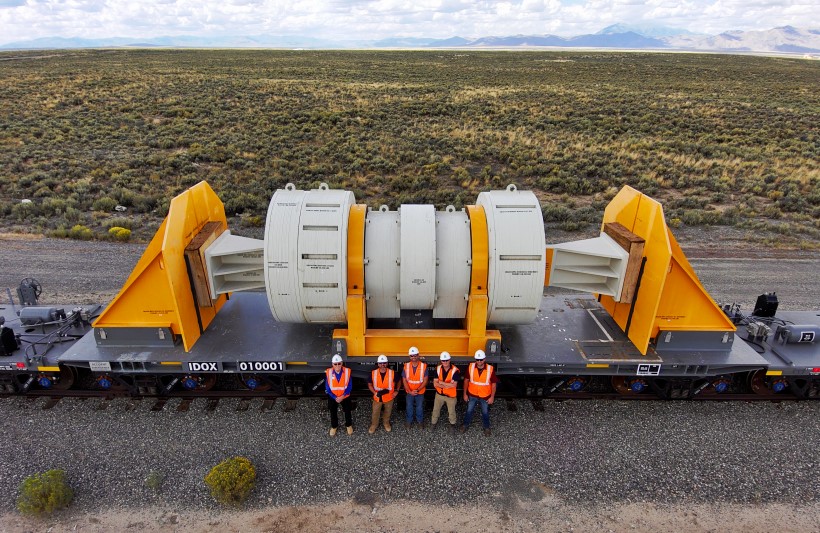
The U.S. Department of Energy (DOE) recently completed a 1,600-mile round-trip journey from Colorado to Idaho to wrap up final testing on the Atlas railcar.
Why it matters: The new specialized railcar will be used to safely and securely transport the nation’s commercially spent nuclear fuel and high-level radioactive waste.
What’s next: Atlas could be cleared for operational use before the end of the year.
- Atlas is a 12-axle railcar designed specifically to transport large containers of spent nuclear fuel and high-level radioactive waste and meets the highest safety standards set by the Association of American Railroads (AAR).
The final test simulated a full-scale shipment of spent nuclear fuel, carrying steel test weights instead of radioactive cargo.
The railcar was loaded to its maximum weight with a 480,000-pound test load designed to simulate the heaviest transport container certified by the U.S. Nuclear Regulatory Commission.
The train departed from Pueblo, Colorado, on September 5 and completed a successful four-day round-trip journey to Scoville, Idaho, collecting valuable data along the way. Atlas was accompanied by a rail escort vehicle (REV), two buffer railcars, and two Union Pacific Railroad locomotives.
- By the numbers: The entire trip logged more than 1,680 total miles
- DOE plans to use Atlas and other railcars to support emergency responder training and informational roadshows prior to commencing shipments of spent nuclear fuel to a federal consolidated interim storage facility.
Go Deeper: To see the new railcar in action, check out this video on YouTube.