
Harry Brearly was a metallurgist working in 1913 to improve rifle barrels when he accidentally discovered that adding chromium to low carbon steel gave it more rust resistance. At a minimum of 12% chromium the metal was shown to be stain ‘less’ and thus the term stainless steel was born. Modern day stainless steels often contain more than just added chromium; nickel, titanium and niobium are commonly added to carbon steel to boost its corrosion resistance. These powerful additives give steel a boost in cleanliness without sacrificing any of the strength and durability the metal is known for.
At Skolnik Industries, stainless steels barrels aren’t just corrosive resistant and antibacterial, but they are also made thicker and stronger than industry standards. As per 49 CFR 178.600 Skolnik Stainless Steel Drums are UN and DOT certified for the transport and storing of hazardous materials. These drums can be produced with 304, 316 or 409 type steel and are offered as both open and tight head drums. Ranging in sizes from 5-110 gallons and gauges from 20 to 16, there is a stainless steel barrel for almost every industry’s benefit. In addition to corrosion resistance and extra strength, Skolnik stainless steel drums also have higher reusability than a carbon steel drum. Because stainless steel does not absorb any materials it comes into contact with after a proper cleaning the drum may be ready to a second or even third use. Depending on a materials composition, a stainless steel drum may be the safest and most effective way to transport or the store the contents.
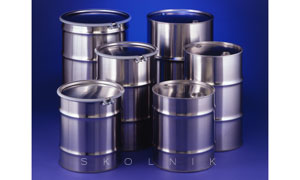
A stainless steel drum is strong and secure way to store transport and a wide variety of materials, and given proper care and maintenance can often be reused, which saves our customers time and money. Everything from metal barrels holding hazardous waste to the refrigerator in your grandma’s kitchen uses stainless steel for its cleanliness and ability to resist corrosion. When Brearly first discovered the benefits of adding chromium to carbon steel I doubt he realized just how commonly this rust resistant steel would become.